Contact us

A new era in access control begins today.
Aliro has officially launched, introducing the first open, interoperable standard purpose-built for secure mobile credentials and access reader communication.
For an industry that is well known for its proprietary ecosystems, the launch of Aliro marks a major evolution. An evolution that began as far back as 2023 where countless engineering hours have gone into the development and shaping of this protocol and the entire program itself.
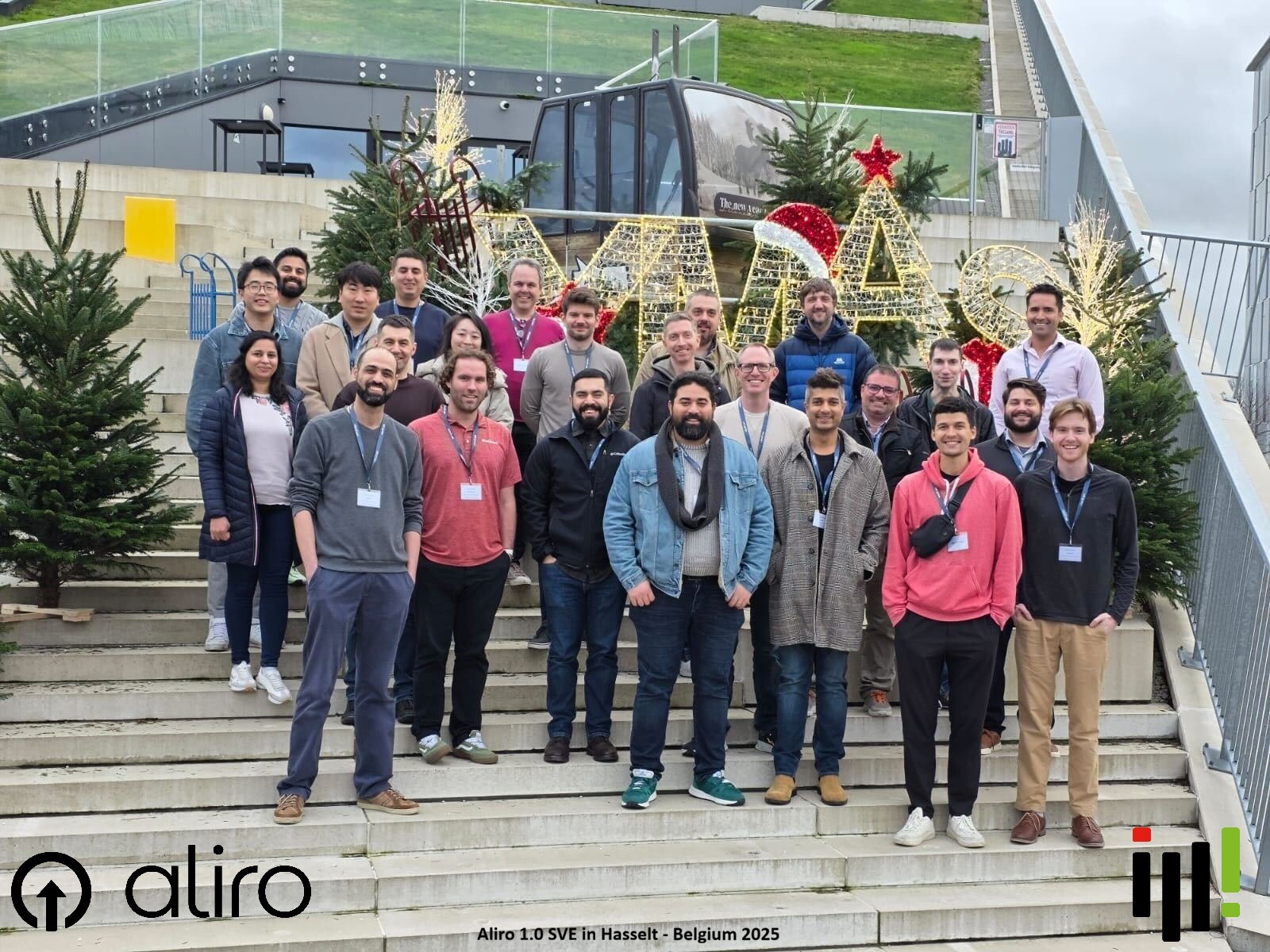
These efforts came together nicely in December 2025, where engineers representing chip manufacturers, product developers, and authorised test labs gathered at Resillion’s premises located in Hasselt (Belgium) and in Shenzhen (China) to finalise the release of the Aliro 1.0 specifications and certification program.
This new standard is a solid first step towards resolving an issue that has haunted the smart access industry for a while now: fragmented smart access.
Fragmented smart access: the need for an open standard
Smartphones and wearables have completely changed how we authenticate in the modern world. We tap to pay. We board flights digitally. We all store IDs and tickets securely on our devices.
Yet something as simple as unlocking a door has often meant being restricted to a closed ecosystem.
Proprietary mobile key solutions have dominated the market. Apple Home Key, for example, allows users to unlock doors using an Apple device or wearable – but only within their specific ecosystem. Other manufacturers offer similar capabilities, yet they rely on their own protocols.
The result was fragmentation.
Manufacturers faced long-term compatibility challenges. Innovation slowed. Scaling became harder.
It’s clear that the industry desperately needs a unifying framework.
The broader smart home industry has already shown us a different path. With the introduction of open standards like Matter, device communication across manufacturers has become more unified. Interoperability has improved. Consumer confidence has grown. The market has accelerated.
Smart access, however, presents a distinct challenge.
Unlocking a door isn’t just another device interaction. It requires secure identity exchange at close range – built on robust credential management, precise proximity detection and strong cryptographic protection. In other words, it demands a purpose-built framework designed specifically for authentication.
That’s why this moment matters. So, with this release of the Aliro open standard, we’re at a tipping point: where proprietary solutions will give way to a common protocol and certification for smart access manufacturers, leading to greater participation.
The Aliro open standard: a closer look
Aliro is the first industry-wide open standard designed specifically for mobile access credentials and secure reader communication.
It defines how smartphones, wearables and access readers provision, authenticate and exchange digital credentials securely. Rather than extending an existing smart home stack, Aliro establishes a dedicated framework for identity at the door.
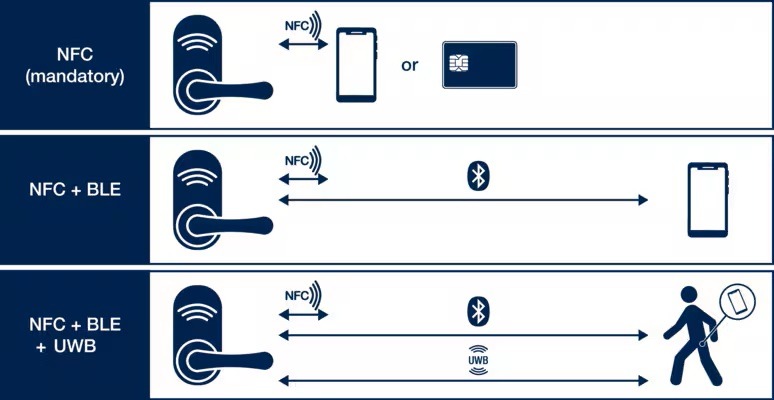
Aliro supports three physical transmission methods:
- Near Field Communication (NFC) for tap-based interactions
- Bluetooth Low Energy (BLE) for convenient proximity access
- Ultra-Wideband (UWB) for precise, distance-aware unlocking
To protect credentials, Aliro uses asymmetric cryptography for certificate-based authentication. Once trust is established, communication continues via symmetric encryption. This means secure, efficient exchanges between device and reader.
Here’s how each of these technologies work when a user attempts to open a door:
The result?
A secure, interoperable ecosystem where manufacturers are no longer constrained by proprietary credential systems.
Aliro is more than a specification. It enables real business outcomes, levelling the playing field for smart access manufacturers. Overall, it delivers:
- Simplicity – Reduced integration complexity
- Flexibility – Support for diverse architectures and deployments
- Security – Robust, certificate-based cryptographic protection
- Interoperability – Cross-platform compatibility across devices and readers
- Scalability – Faster ecosystem expansion and lower long-term support costs
By removing technical barriers and standardising credential frameworks, Aliro unlocks possibilities for innovation in wider product areas.
Where Aliro will have the biggest impact
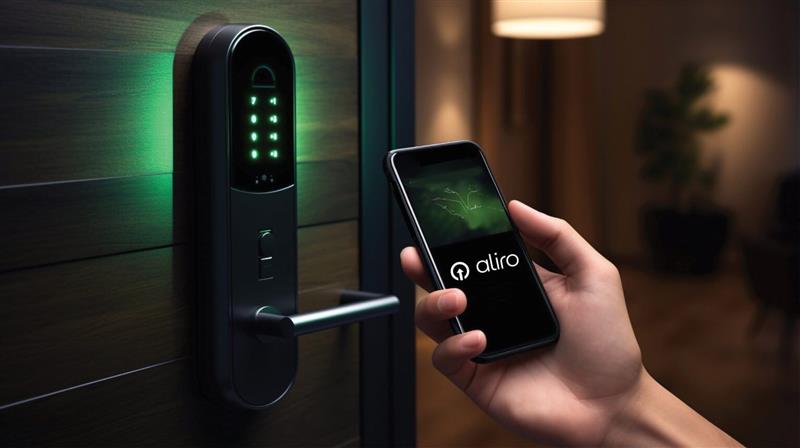
Wherever you’ve got a crossover of secure identity and physical entry you can see the potential use cases for Aliro.
- In residential settings, a homeowner can give a time-limited digital key to a dog walker or visiting relative – no spare keys, no platform restrictions, no manual reprogramming.
- In office buildings, employees can move around from the car park to reception and up to secure floors using the same interoperable mobile credential, regardless of what device they’ve got.
- In short-term rentals, guests can receive a secure mobile credential when they check-in, which only works for the duration of their stay and expires automatically when they checkout.
- In logistics and last-mile delivery, drivers can be issued controlled, auditable access to buildings or lockers within precise time windows, reducing missed deliveries while remaining secure.
From everyday home entry to high-turnover commercial environments, Aliro will provide a unified, secure foundation for modern access control.
But before manufacturers can get started with their smart access offering, it’s important to understand the importance of getting an Aliro certification.
Getting an Aliro certification with Resillion: turning compliance into competitive advantage
Adopting Aliro is only the first step.
Certification demonstrates compliance, interoperability and security and may become a pre-requisite in major ecosystems and retail channels.

Faster time to market

Greater retailer confidence

Reduced integration risk

Clear competitive differentiation

So, here’s why you should partner with Resillion:
Being an end-to-end quality assurance partner, we deliver integrated, AI-powered testing across hardware, software and connected ecosystems. As a trusted compliance and certification provider for Matter, Zigbee, Bluetooth and Wi-Fi technologies, we now offer Aliro certification services from our accredited facilities in Hasselt and Shenzhen.
With the Aliro v1.0 specification now live, our expert engineers are ready to guide your product through every stage of certification.
Aliro represents the next evolution in access control. Yet the question is not whether the industry will adopt it, but how quickly you will.
WEBINAR
Supercharging AI assurance with Test Data Automation
Is your test data ready for scalable AI assurance under NIS2?

Related Insights
Providing solutions in a unified, structured approach across all critical domains to enable end-to-end quality.


Get in touch
Providing solutions in a unified, structured approach across all critical domains to enable end-to-end quality – Because we’re the only ones who can.